
Aspendos
12 Months
Book Now & Pay Later.
Free Cancellation & Refund.
Tour details
Discover Aspendos – Roman Grandeur, Architectural Wonders & Timeless Performances
Step into the grandeur of ancient Rome, where monumental architecture, extraordinary engineering, and centuries of history come to life.
Located in the heart of Antalya Province, Aspendos is one of Türkiye's most remarkable archaeological destinations, internationally celebrated for its magnificent Roman theatre and extraordinary ancient heritage.
Situated near the modern town of Serik, Aspendos offers visitors an unforgettable journey into the architectural achievements and cultural traditions of the ancient Mediterranean world.
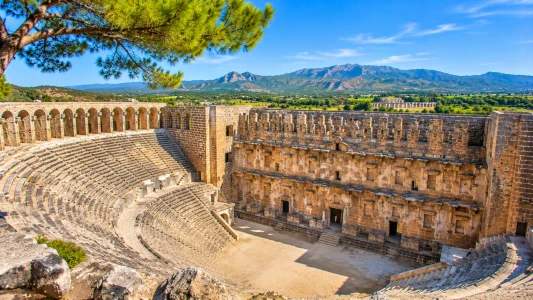
The city's most iconic monument, the Aspendos Theatre, is widely regarded as one of the best-preserved Roman theatres in existence.
Built during the second century AD, this extraordinary structure continues to impress visitors with its monumental seating arrangements, remarkable stage building, and sophisticated architectural design.
Standing inside the theatre, visitors can imagine the performances, public gatherings, and cultural celebrations that once brought thousands of spectators together.
Aspendos is particularly fascinating because its ancient theatre is not simply a historical monument. It remains an important cultural venue, hosting selected concerts, opera, ballet, and other performances under carefully managed conditions.
Beyond the theatre, the archaeological landscape reveals the remains of a once-prosperous ancient city, including an impressive aqueduct system, public buildings, and structures associated with daily life in the Roman period.
The surviving aqueducts demonstrate the remarkable engineering knowledge of ancient civilizations and provide another compelling reason to explore the site.
Aspendos also offers a fascinating connection to the broader history of Pamphylia, the ancient region that included several important settlements along Türkiye's southern Mediterranean coast.
For history enthusiasts, architecture lovers, cultural travelers, and photographers, Aspendos provides an exceptional opportunity to discover the legacy of the Roman Empire.
Its location also makes it a rewarding cultural excursion from Antalya, Belek, Side, and other destinations along the Turkish Riviera.
Whether you're exploring ancient civilizations, admiring monumental architecture, or attending a memorable cultural performance, Aspendos offers a distinctive journey through history.
Discover Aspendos with Kudos Travel — where the architectural brilliance of ancient Rome meets the timeless spirit of Mediterranean culture.
Need to Know
Aspendos Travel Essentials
Location: Near Belkıs Village, Serik District, Antalya Province, Southern Türkiye.
Known For: The remarkably preserved Roman theatre, ancient aqueducts, Roman engineering, archaeological heritage, and selected international cultural performances.
Best Time to Visit: March through May and September through November generally offer pleasant conditions for archaeological sightseeing. Summer visits are also possible, although daytime temperatures can be high.
Recommended Visit Duration: Approximately 1.5–3 hours for the main archaeological highlights, depending on visitor interests and accessible areas. A full-day cultural excursion can combine Aspendos with Perge, Side, or other nearby attractions.
Getting There: Aspendos is accessible by road from Antalya, Belek, Side, and other destinations along the Mediterranean coast. Antalya Airport is the principal international gateway for the wider region.
Getting Around: Private transfers, rental vehicles, and organized excursions are convenient ways to reach Aspendos. Exploring the archaeological site involves walking on potentially uneven surfaces.
Historical Periods: Ancient Pamphylian settlement with significant Hellenistic and Roman heritage, followed by later historical occupation and reuse.
Architectural Highlight: The second-century AD Roman theatre, celebrated for its exceptional preservation and impressive stage building.
Engineering Heritage: Ancient aqueducts, including a sophisticated water transportation system demonstrating Roman hydraulic engineering.
Cultural Experiences: Archaeological sightseeing, guided heritage excursions, architectural photography, and selected opera, ballet, or concert performances when scheduled.
Accommodation: Aspendos is generally visited as a cultural excursion rather than a standalone overnight destination. Travelers commonly stay in Antalya, Belek, Side, or nearby coastal resort areas.
Ideal For: History enthusiasts, architecture lovers, cultural travelers, educational groups, photographers, families interested in heritage, and visitors seeking authentic historical experiences.
Travel Style: Ancient civilization tours, Roman heritage exploration, guided archaeological excursions, educational travel, and cultural performance experiences.
Nearby Destinations: Perge Ancient City, Side Ancient City, Belek, Serik, Köprüçay River, and Antalya.
Signature Experience: Standing inside the magnificent Roman theatre of Aspendos and discovering the extraordinary architectural achievements of the ancient Mediterranean world.
What to Bring?
Travel Tips for Aspendos
- Visit the Ancient Theatre
- The Roman theatre is the main attraction of Aspendos and deserves sufficient time for exploration.
- Take time to appreciate its monumental stage building, seating arrangements, and extraordinary architectural preservation.
- Consider a Guided Historical Experience
- A knowledgeable guide can explain the historical significance of Aspendos, the architectural principles of the theatre, and the engineering achievements of the ancient city.
- Guided visits are particularly valuable for travelers interested in Roman civilization.
- Explore Beyond the Theatre
- Many visitors focus exclusively on the famous theatre, but the wider archaeological site also includes the remains of aqueducts and important public buildings.
- Allow additional time if you wish to explore these lesser-known historical features.
- Discover Roman Engineering
- The aqueduct system is one of the most fascinating aspects of Aspendos.
- Its surviving structures provide an opportunity to understand how Roman engineers supplied water to ancient urban settlements.
- Check Cultural Performance Schedules
- Aspendos is associated with opera, ballet, concerts, and other cultural performances.
- Event dates, venues, access arrangements, and ticket availability vary, so confirm current schedules before planning your visit.
- Visit During Cooler Hours
- The archaeological landscape can become very hot during the summer months.
- Morning visits are often more comfortable for sightseeing and photography.
- Wear Comfortable Walking Shoes
- The archaeological site includes stone surfaces, uneven paths, and exposed outdoor areas.
- Comfortable footwear is recommended for a safer and more enjoyable visit.
- Bring Sun Protection
- Carry sunscreen, sunglasses, a hat, and drinking water, especially during warmer months.
- Shaded areas may be limited in parts of the archaeological landscape.
- Respect Archaeological Conservation Rules
- Aspendos is an important cultural heritage site.
- Follow designated visitor routes, avoid climbing restricted structures, and respect conservation regulations.
- Combine Aspendos with Perge
- Aspendos and Perge offer complementary insights into the ancient Roman and Pamphylian world.
- A combined cultural excursion can provide a richer understanding of the region's archaeological history.
- Explore Nearby Side
- Side offers an attractive combination of ancient monuments, historic streets, and Mediterranean coastal scenery.
- It can be a rewarding addition to a cultural itinerary featuring Aspendos.
- Arrange Private Transportation
- Aspendos is located outside Antalya's main urban center.
- Private transfers and organized excursions offer convenient access, particularly for travelers staying in Belek, Antalya, or Side.
- Discover Aspendos Your Way
- From private archaeological excursions and Roman heritage journeys to educational visits and memorable cultural performances, Kudos Travel can help you discover Aspendos through personalized travel experiences.
Tour Program
Places to Explore in Aspendos
Aspendos Ancient Theatre
The magnificent Roman theatre is the undisputed highlight of Aspendos and one of the most impressive ancient monuments in Türkiye.
Constructed during the reign of Emperor Marcus Aurelius in the second century AD, the theatre is celebrated for its exceptional state of preservation and monumental architectural design.
Its imposing stage building, semicircular seating area, and remarkable visual harmony make it a masterpiece of Roman architecture.
The Theatre's Stage Building
One of the most extraordinary features of Aspendos is its remarkably preserved stage building.
The monumental structure provides a rare opportunity to appreciate the architectural scale and decorative traditions of an ancient Roman performance venue.
Ancient Theatre Seating & Cavea
The theatre's impressive seating arrangement demonstrates the sophistication of Roman public architecture.
Visitors can appreciate how the ancient structure was designed to accommodate large audiences while maintaining excellent visibility toward the stage.
Access to individual sections may be restricted for conservation and safety reasons.
Aspendos Aqueducts
Beyond the theatre, the remains of Aspendos' ancient aqueduct system reveal the engineering achievements of the Roman period.
The aqueducts transported water to the ancient city and incorporated an innovative system designed to overcome differences in terrain elevation.
These structures are among the site's most fascinating archaeological features.
Ancient Aspendos Acropolis
The elevated area of the ancient settlement preserves the remains of public buildings and urban structures associated with the historic city.
Exploring this archaeological landscape provides insight into Aspendos beyond its famous theatre.
Aspendos Basilica
The remains of a large basilica form part of the ancient city's monumental architectural landscape.
The surviving foundations and structural elements reflect the importance of public buildings in the urban life of ancient Aspendos.
Ancient Agora
The agora served as an important center of public and commercial life in the ancient city.
Its archaeological remains help visitors understand how trade, administration, and social activities shaped the settlement.
Aspendos Nymphaeum
The remains of the ancient monumental fountain offer another glimpse into Roman urban planning and architectural traditions.
The structure reflects the importance of water and public spaces in the daily life of the city.
Ancient Stadium Remains
Aspendos preserves traces of structures associated with athletic and public activities.
Although less visually prominent than the theatre, these remains contribute to understanding the broader urban character of the ancient settlement.
Ancient City Walls & Archaeological Landscape
The surrounding archaeological area includes surviving fragments of ancient structures and fortifications.
Walking through the landscape offers opportunities to appreciate the scale and historical setting of Aspendos.
Köprüçay River – Ancient Eurymedon
The nearby Köprüçay River, known in antiquity as the Eurymedon, played an important role in the historical development of the region.
The river valley provides geographical context for Aspendos and its connections to the wider Mediterranean world.
Historical Eurymedon Bridge – Belkıs Bridge
Located near Aspendos, the historic bridge across the Köprüçay River reflects successive periods of construction and rebuilding.
The surviving structure is associated with later Seljuk-period work over an earlier Roman crossing.
Perge Ancient City
Located within the wider Antalya region, Perge is another important archaeological destination of ancient Pamphylia.
Its monumental streets, city gates, baths, and public structures make it an excellent complement to an Aspendos visit.
Side Ancient City
Side offers a remarkable combination of Roman archaeological heritage and Mediterranean coastal scenery.
Its ancient theatre, Temple of Apollo, and historic harbor provide a rewarding extension to a cultural journey through the region.
Antalya Archaeological Museum
Located in Antalya city, the archaeological museum is an important destination for travelers interested in the ancient civilizations of the Mediterranean region.
Its collections help place Aspendos and the wider Pamphylian heritage within a broader historical context. Check the museum's current visitor arrangements before planning a visit.